


 Larger Text
 Smaller Text
 Print


Proud Sponsor of

Structure and Properties of Materials
MATERIALS 1M03
Course Information 2013-2014
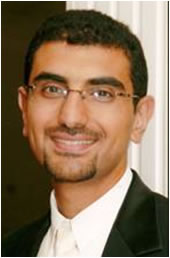
Instructional Team
 |
 |
 |
|
|---|---|---|---|
Course Co-ordinator C02, C03 JHE 213 |
C01, C04 JHE 357 |
C05 ETB 304 |
Email: prof1m03@mcmaster.ca
Emails to our Avenue account will be forwarded to the above address
Welcome Guide:
Lectures
| C01 | Tu We Fr 15:30 | ITB/AB102 |
J. Hoyt |
| C02 | Tu We Fr 12:30 | ITB/137 | H. Zurob |
| C03 | Mo We 11:30 Fr 13:30 | ITB/AB102 | H. Zurob |
| C04 | Tu We Fr 9:30 | ITB/AB102 | J. Hoyt |
| C05 | Mo We 14:30 Fr 16:30 | ITB/AB102 | K. Grandfield |
Each section of the class will cover exactly the same content.
All course requirements (assignments, tests, exams, etc.) are common
to each section. On a day-to-day basis however, the two sections
may not maintain exact synchronization. You should therefore attend
the same lecture section continuously.
Office Hours
Office hours: JHE 352, Weekdays from 1:30 to 3:30 (Starting Jan. 13th)
By email prof1m03@mcmaster.ca
In addition, all of us would be happy to meet with you at any other time. Please call or email to arrange an appointment.
Graduate TA's
| Xavier Michaut | michauxd@mcmaster.ca |
|
| Vicky Vuong | vuong4@mcmaster.ca |
|
| Xiaoyue Wang | wang783@mcmaster.ca |
|
| Edson Bellido Sosa | bellidep@mcmaster.ca | |
Course Objectives
| By the end of this course you should understand: | ||
|
||
- The range of properties exhibited by materials |
||
| To get to this understanding you need these fundamentals: | ||
|
||
| - Bonding and crystal structure - Crystalline defects - Microstructure / macrostructure |
||
Method of Assessment
| Five homework assignments (Avenue) | 20% |
| Two term tests | 30% |
| Final exam | 50% |
In addition, there are two optional EPIC labs. You’ll earn 2.5% bonus for each lab you complete.
Lab 1: Exploring Crystal Structures with Zometool kits (1 hr)
Jan 13 to 31 in ETB 126 from 2:30 to 5:30 everyday.
Lab 2: Temperature Measurement (1 hr)
March 10 to 28 in ETB 126 from 2:30 to 5:30 everyday.
Textbook
Officially following: Callister & Rethwisch, Materials Science and Engineering, An Introduction – 8th Edition (Wiley). Previous editions are fine.
Note that the bookstore has:
- Traditional hardcover version
- Binder version
- Electronic copies can be purchased online.
Avenue
Avenue will be used for the following:
- Posting class and tutorial notes. These will be available in pdf format. You will need Adobe Acrobat Reader to use them. You can get a free, up-to-date copy of Acrobat Reader at http://www.adobe.com/
- Assignments. You will do your homework assignments and tutorial quizzes online.
- Announcements. Check frequently for important updates from your professor.
- Calendar. Details about due dates, time and location of tests, and other important information will be posted on the AVENUE calendar.
- Message board. You can use this tool to communicate with other students in the class and your instructors.
The Avenue message board has two functions:
It is an online meeting ground for everyone involved with the course. You can post questions and comments about course materials, assignments, and so on. Students are encouraged to help each other out by answering queries and making suggestions, as long as it is done in an appropriate way. This means that the university's Statement on Academic Ethics applies to Avenue message boards. Posting answers to homework questions or detailed methods of solution for example would not be acceptable. However, pointing out that the best way to answer a question is to read a certain section of the text or clarifying a concept is perfectly acceptable. The instructors and TAs will monitor the postings and may intervene from time to time to prevent false information from being spread. They will also be watching to make sure everyone uses the site appropriately: Dialogue should always be respectful.
The message board will also be used by the instructors to provide you with up-to-date information about the course. This might include corrections, time changes and other updates. It's your responsibility to consult the message board on a regular basis.
Homework Assignments on Avenue
There will be 5 homework assignments this semester. All of them will done be on Avenue.
The homework assignments will appear on Avenue 1 or 2 weeks before they are due. Assignments not submitted on time will not be marked. Assignments are due at 5 pm on the due date. However, there will be a 12-hour leniency period designed to give you some leeway in case you have computer problems or the server is down for some reason. No excuses will be accepted for not submitting your assignment on time.
All homework assignments will be completed using the quiz tool in Avenue. Most of you will be familiar with this from Level I Chemistry. There are some differences that you should keep in mind:
- The questions on each assignment are assigned randomly from a question bank. Each student will get a somewhat different set of questions that covers the same set of topics.
- We use a variety of question types including multiple choice, matched lists, true/false and numerical answer.
- The numerical answer questions have separate boxes for the numerical answer and the appropriate units. The units required are established by the question but you must supply the units in the appropriate form nonetheless. This is good engineering practice. The unit box is assigned 10% of the value of the question. The numerical part of a question is marked as correct if the answer is within +/- 5% of the correct value. No account is taken of the number of significant digits in your answer.
- Once an assignment is complete you will receive immediate feedback that will l enable you to determine where you went wrong on questions that were marked incorrect.
- You will be allowed to complete each assignment up to three times. Note that on each attempt you will receive a different set of questions from the question bank. Your overall grade for the assignment will be the average grade for those assignments that you attempt. (, i.e. you do not need to do the assignment more than once).
Tests and the Final Exam
There will be two term one-hour tests this semester. The subject area covered by each test will be posted on the Avenue site. The term tests will be held on:
| Term test #1: | Wednesday, February 4, 2014 | 7:00-8:00 pm |
| Term test #2: | Wednesday March 4, 2014 | 7:00-8:00 pm |
Please consult Avenue for the locations of each test.
Contact Danielle Marcellin, the MSE Undergrad Administrative Assisant if you have a conflict for either test marceld@mcmaster.ca, JHE 357, ext 26626
You will need a calculator for both the term tests and the final exam. The only acceptable calculator is the Casio FX 991. No other calculator is permitted.
For both the term tests and the final exam you will be allowed to bring a double-sided (8 1/2" x 11") crib sheet with whatever you want written on both sides. Your crib sheet may be printed or hand-written and may contain figures and equations as well as text.
You must bring your McMaster ID with you and display it on the writing table for inspection during tests and exams.
The final exam will cover all work studied throughout the semester. It will be three hours long. The date and time of the final exam will be scheduled by the Registrar's Office.
If you are unable to submit an assignment or quiz, write a test or attend the final exam due to illness, complete the on-lineMcMaster Student Absence Form (MSAF). More information can be found at the following link https://www.mcmaster.ca/msaf/index.html.
Ethics
You need to be familiar with the Statement on Academic Ethics and the Senate Resolutions on Academic Dishonesty. These documents are found in the Senate Policy Statements provided when you registered and are also available in the Senate Office. Any student who breaks these resolutions will be treated according to the published policy.
Academic dishonesty consists of misrepresentation by deception or by other fraudulent means and can result in serious consequences, e.g. the grade of zero on an assignment, loss of credit with a notation on the transcript (notation reads: "Grade of F assigned for academic dishonesty"), and/or suspension or expulsion from the university. It is your responsibility to understand what constitutes academic dishonesty. For information on the various kinds of academic dishonesty please refer to the Academic Integrity Policy, specifically Appendix 3.
The following illustrates only three forms of academic dishonesty:
- Plagiarism, e.g. the submission of work that is not one's own or for which other credit has been obtained. (Insert specific course information, e.g. style guide)
- Improper collaboration in group work. (Insert specific course information)
- Copying or using unauthorized aids in tests and examinations.
Discrimination Policy
McMaster University is concerned with ensuring an environment that is free of all adverse discrimination. If you encounter a problem that cannot be resolved through discussing it with the people involved, please contact the Department Chair, the Sexual Harassment Office or the Human Rights Consultant, as soon as possible.